10 Crucial Methods for Construction Cost Control
Effective cost control methods in construction industry often determines whether a project turns a profit or suffers a loss, as profit exists in the gap
Bauwise centralizes and simplifies construction cost control — giving Executives, Project Managers, and Quantity Surveyors real-time financial visibility to prevent budget overruns and protect construction profits.
Active Users
Construction Projects
Of Construction Budgets


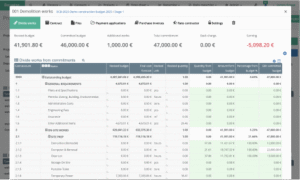
Allocate budget based on construction stages or buildings. Track Forecast to Complete (FTC) and Estimate at Completion (EAC). Control budgets through versions and approval locks. Forecast profitability, manage accruals, and sync financial data with integrated accounting or ERP software.
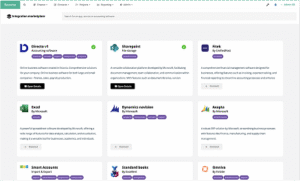
Automate data flow between your ERP or accounting software and Bauwise. When integrated, construction-related invoices flow directly into Bauwise for approval and return to the ERP or accounting software enriched with data — cost allocations, budget lines, and approver info — no double work required.
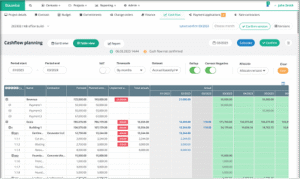
Get a structured, automated framework to plan, forecast, and monitor construction cash flow across all project stages. Generate cash flow forecasting baselines with one click, fill past periods with actual cost and revenue data, and align projections with the project’s Cost-at-Completion (CAC). Refine future forecasts, adjust monthly distributions, and manage approvals through version-controlled tracking.
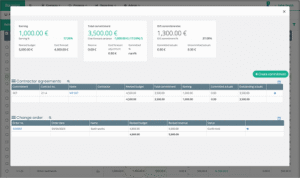
Automate commitments — create purchase orders (PO) and subcontractor contracts directly from budget lines. Manage scope changes, variations, and back charges from Applications for Payment (AfP) in real time. Track actuals, advances, and accruals at every stage. Allocate contingency reserves, forecast accurately, and centralize all vendor data for better procurement decisions.
Track, review, and approve construction project scope changes. Submit change order requests with attachments, automatically calculate their impact on project cost, and adjust budgets upon approval. Maintain versioned audit trails and status tracking to ensure compliance, transparency, and project continuity.
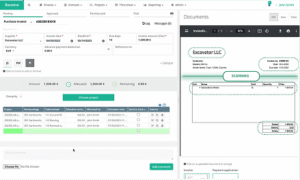
Automate purchase invoice processing with AI-powered data extraction, pre-defined approval workflows and unique invoice allocations. Link invoices directly to purchase orders (PO), contracts or Applications for Payments (AfPs). Manage consolidated invoices for multiple projects between different teams. Meet governance standards, and comply with internal financial policies.
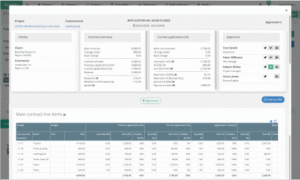
Accelerate month-end reporting between Contractors and Subcontractors by streamlining the Applications for Payment process into a structured, auditable workflows. Initiate change orders and track progress, apply retentions and back charges with full compliance. A dedicated Subcontractor portal, automated notifications, and digital validation keep all parties aligned.
Create tender packages directly from budget lines, identify qualified bidders through the Bauwise database, and issue invitations to tender (ITT). Provide secure, login-free access for bidders to submit RFQs and compile all bids into an automatically generated comparison table. Ensure full traceability by linking every bid and award back to the budget lines and cost codes.
Bauwise provides real-time visibility into project commitments and cost-to-complete, enabling approval-based variation management, contractor payment certification, and consolidated commercial reporting.
Office towers, mixed-use developments, retail centers, and corporate campuses. Bauwise enables budget control from preconstruction through delivery, subcontractor payment certification, variation control for design and tenant changes, and real-time cost-to-complete forecasting across commercial real estate developments.
Multi-family housing, apartment complexes, housing estates, and large-scale residential communities. Bauwise supports developer-side budget control and lender draw reporting, contractor payment certification, portfolio-level variation tracking, and cost-to-complete forecasting across phased residential developments.
Logistics hubs, automated warehouses, cold storage facilities, and last-mile distribution centers. Bauwise provides cost planning and change control for fast-track industrial builds, commercial control across MEP and automation scopes, contractor payment verification, and cost forecasting across large-scale logistics construction projects.
Hyperscale and colocation data centers, edge facilities, and high-MEP digital infrastructure developments. Bauwise enables cost management of long-lead equipment commitments, milestone-based payment certification, variation management, and cost-to-complete forecasting across fast-track digital infrastructure projects.
Utility-scale solar farms, wind installations, substations, and grid interconnection infrastructure. Bauwise enables EPC budget control, procurement cost tracking for long-lead equipment, cash flow forecasting, progress valuations, and variation management across schedule-driven renewable energy construction projects.
Thermal power plants, substations, transmission upgrades, and utility network expansions. Bauwise provides commercial cost control for EPC-heavy projects through milestone-based payment certification, variation and claims management, and cost forecasting across complex power and grid delivery programs.
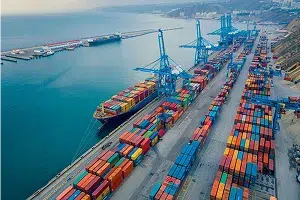
Container terminals, port expansions, quay walls, breakwaters, and maritime logistics facilities. Bauwise supports commitments-based construction developments, contingency allocation, risk, variation and claims management, contractor payment certification, and commercial oversight across complex, interface-heavy port and marine construction projects.
Rail corridors, stations, depots, signaling systems, and urban transit infrastructure. Bauwise supports BoQ-based quantity verification, progress valuations, variation and claims management, and commercial oversight across multi-package, access-constrained rail and transit projects.
Bauwise equips construction CEOs with an automated cost management tool to maintain financial control, efficiency, and profitability across expanding portfolios. The cost management software links budgets, forecasts, contracts, and purchase orders in one system, enforcing approval workflows that preserve budget integrity and accuracy. Chief Executive Officers gain real-time visibility into consolidated portfolio performance, safeguarding project continuity, automating reporting, and simplifying construction portfolio management.
Bauwise provides an automated cost management solution for construction CFOs to obtain timely, verified financial data for cash flow and refinancing decisions. The software consolidates construction budgets, contracts, purchase orders, change orders, invoices, and Applications for Payment into a unified data source, ensuring all figures are validated, traceable, and audit-ready before reaching financial statements. Chief Financial Officers can track contingency budgets and risk reserves, gain visibility into liquidity, flag budget overruns early, and forecast portfolio-level cash flow.
Bauwise helps Construction Managers and Division Managers ensure all construction project costs are reported and accounted for, using an automated construction cost management tool. The software tracks linked budgets, contracts, purchase orders, and change orders, so every commitment is recorded, allocated, and tied to the correct project and cost code. Construction and Division Managers can leverage automated purchase invoice and Application for Payment validation rules with audit trails, compare planned versus actual costs in real time, and monitor division-level performance across projects.
Bauwise supports Construction Quantity Surveyors with an automated cost management solution to plan and manage full cycle construction costs — from forecasting and tendering to variation valuations and reporting. The software reconciles interim valuations, change orders, and actual costs in real time, updating forecasts and Estimate at Completion (EAC) automatically once costs are approved. It generates RFQs and tender packages, standardizes bids formats, and applies approval workflows. Links approved variations to their related contracts and cost codes, calculating their budget, commitments and EAC impact.
We’ve got your questions covered. If you can’t find the answer you’re looking for below, feel free to contact us.
Yes. You can import existing budgets, commitments, and actuals into Bauwise and pick up from where the project currently stands. Our team will support you in mapping the data and configuring the platform to match your ongoing workflows—no need to start from scratch. This enables you to continue the project without delays or the need to manually rework existing data.
Yes. We support flexible coding systems that allow you to import budgets using several options, including basic copy and pasting, as well as Excel and CSV file uploads.
Yes. We support integrations with major accounting systems like Microsoft Dynamics 365 Business Central, Odoo, SAP, QuickBooks, Xero, and more. Our team has vast integration experience and can suggest options even for less common tools. We’ll review your accounting software setup to confirm the feasibility and configure the best-fit integration.
Yes. You don’t need to integrate an accounting system to use the software. You can upload your general ledger transactions using an Excel spreadsheet—just drag and drop, and Bauwise will automatically link actuals to your budget, or take advantage of invoice approval workflow, which generates the transactions internally from submitted invoices.
Yes. Bauwise enables you to split any project into multiple subprojects—by construction phase, client budget, buildings, or cost categories—while maintaining a comprehensive and unified project dashboard. The consolidated dashboard displays cost forecasts, profitability, actuals, construction progress, and margin deviations across all subprojects.

Effective cost control methods in construction industry often determines whether a project turns a profit or suffers a loss, as profit exists in the gap

The construction market entering 2026 is increasingly shaped by capital concentration into a narrow set of asset classes — led by major infrastructure projects, as

Real estate project profitability is rarely lost through a single event. It erodes gradually as projects move from underwriting into execution, and it often becomes materially
Dont see Calendly for booking? Click Here to open Calendly
We use cookies on our website to give you the most relevant experience by remembering your preferences and repeat visits. By clicking “Accept All”, you consent to the use of ALL the cookies.